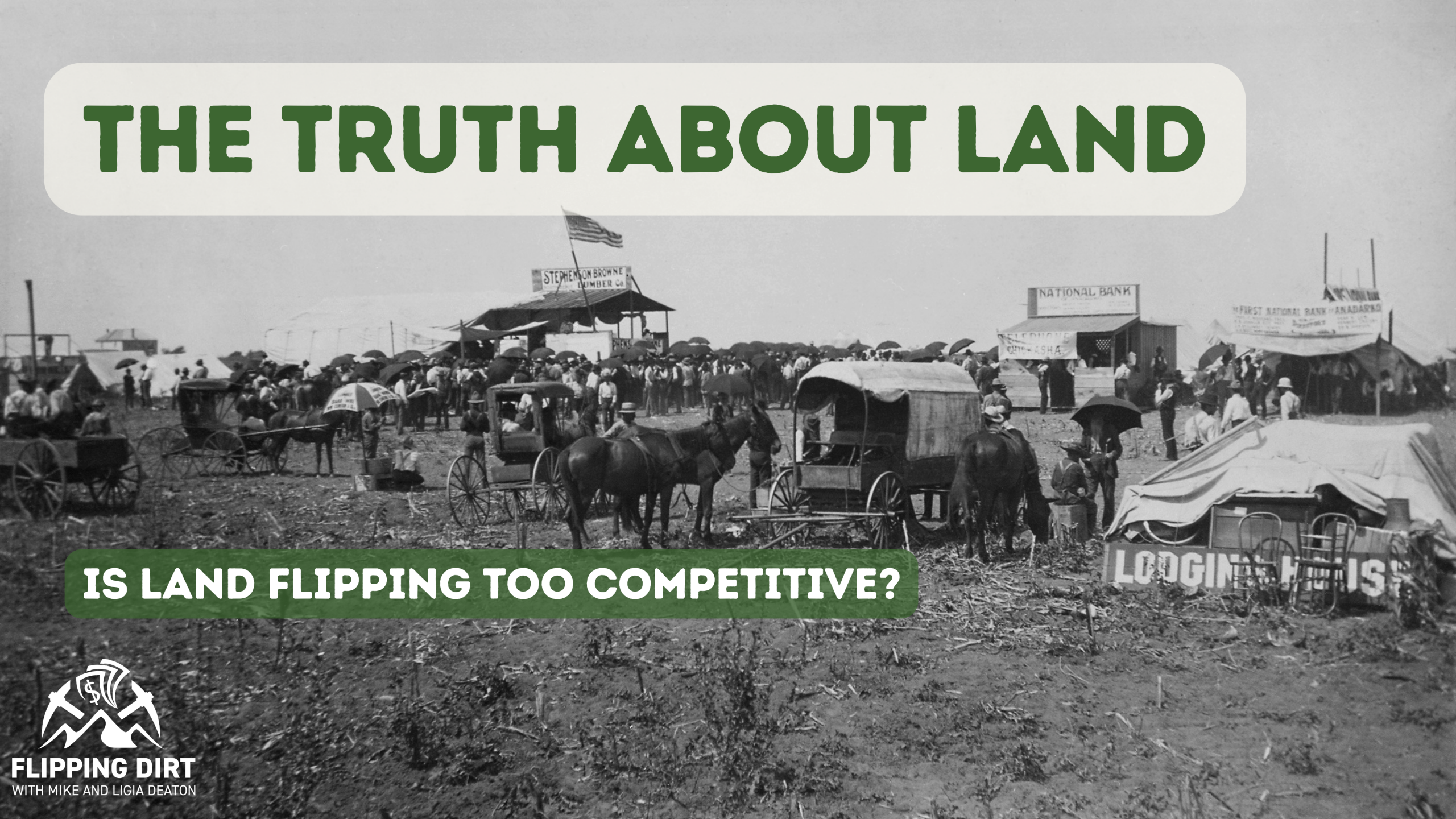
Quick Answer: No, land investing is not too competitive. It feels crowded because more people talk about it online, not because the deals disappeared. With about 1.4 billion privately owned acres spread across thousands of counties, the market is enormous and fragmented. Competition is real in a few popular markets and online, but motivated sellers exist everywhere for operators who do the work.
Is land investing actually too competitive now?
No. The supply of land and motivated sellers dwarfs the number of active investors. What changed is visibility, not opportunity. A few years of viral content made land flipping look crowded, but the actual market is too big and too local to be saturated.
Consider the scale. The United States has roughly 1.4 billion acres of privately owned land, according to the USDA Economic Research Service, spread across more than 3,000 counties. No group of investors is working even a fraction of that. Land is a local, fragmented game, and fragmentation is the opposite of saturation.
Key Takeaways
- Land feels crowded online, but the on-the-ground market is huge and local.
- Competition concentrates in a handful of popular markets. Thousands of counties stay quiet.
- Most “competitors” quit. Consistency alone puts you ahead of the field.
- Better offers and faster follow-up beat more offers.
- The winners niche down by market or parcel type instead of chasing everyone.
Why does land investing feel so crowded?
Land feels crowded because attention is crowded, not because deals are. The rise of land content on YouTube, Instagram, and podcasts put the strategy in front of millions, so it seems like everyone is doing it. Awareness went vertical. Actual active, consistent operators did not.
There is a gap between people who watch land content and people who send offers every week. Most of the perceived competition never makes a single offer. The noise is loud. The real field is thin.
Where is the real competition, and where isn’t it?
Real competition clusters in a few well-known, easy-to-research markets and in crowded online ad channels. It thins out fast in smaller counties, less obvious parcel types, and direct outreach that never touches a bidding war.
| More crowded | Still wide open |
|---|---|
| Famous “hot” land markets | Smaller, overlooked counties |
| Paid online ad channels | Direct offers by mail, text, or call |
| Easy, obvious parcels | Odd shapes, access quirks, niche uses |
| Investors chasing everything | Operators focused on one buy box |
The lesson is simple. Stop competing where everyone is looking and start working where they are not. A focused buy box in a quieter market beats a scattershot search in a famous one.
How do you win in a competitive land market?
You win by being consistent, fast, and specific. Most people quit within weeks, so simply showing up every week puts you ahead. Then you sharpen your edge with better offers and faster follow-up than the few who remain.
Pick one market, learn it cold, and make offers on a schedule. Respond to motivated sellers quickly, because speed and trust win more deals than the highest price. New to this? Start with How to Get Your First Land Deal in 3 Simple Steps, then see realistic numbers in How Much Money Do You Really Need to Start Flipping Land?
Frequently Asked Questions
Is it too late to start land investing in 2026?
No. The market is enormous and fragmented, and most people who learn about land never take consistent action. Starting now, with discipline, still puts you ahead of the majority.
Are there still good land deals available?
Yes. Motivated sellers exist in every county for reasons like inheritance, taxes, or life changes. Good deals come from direct outreach, not from waiting for listings.
Do I need to compete with big investors?
Rarely. Large players cluster in popular markets and channels. Focusing on smaller counties and direct offers keeps you out of bidding wars entirely.
How do I stand out to sellers?
Be responsive, clear, and trustworthy. Fast follow-up and a simple, fair offer beat a slightly higher price from someone who is slow or hard to reach.
Which markets are least competitive?
Generally the smaller, less-publicized counties that are harder to research. They take more effort to learn, which is exactly why fewer investors work them.
Your next step
Competition is mostly a story people tell themselves before they quit. The deals are still out there. The question is whether you will do the work most people only watch.
Want a clear starting path? Watch our free training on How Land Flipping Actually Works, or explore Coaching Packages if you want a guide.
About the authors: Mike and Ligia Deaton were both laid off in 2016. They went all in on land and have since closed 700+ land deals at a 150%+ average annual ROI over 8+ years. They now coach everyday people to build freedom through land. We’ll catch you on the Flip Side!