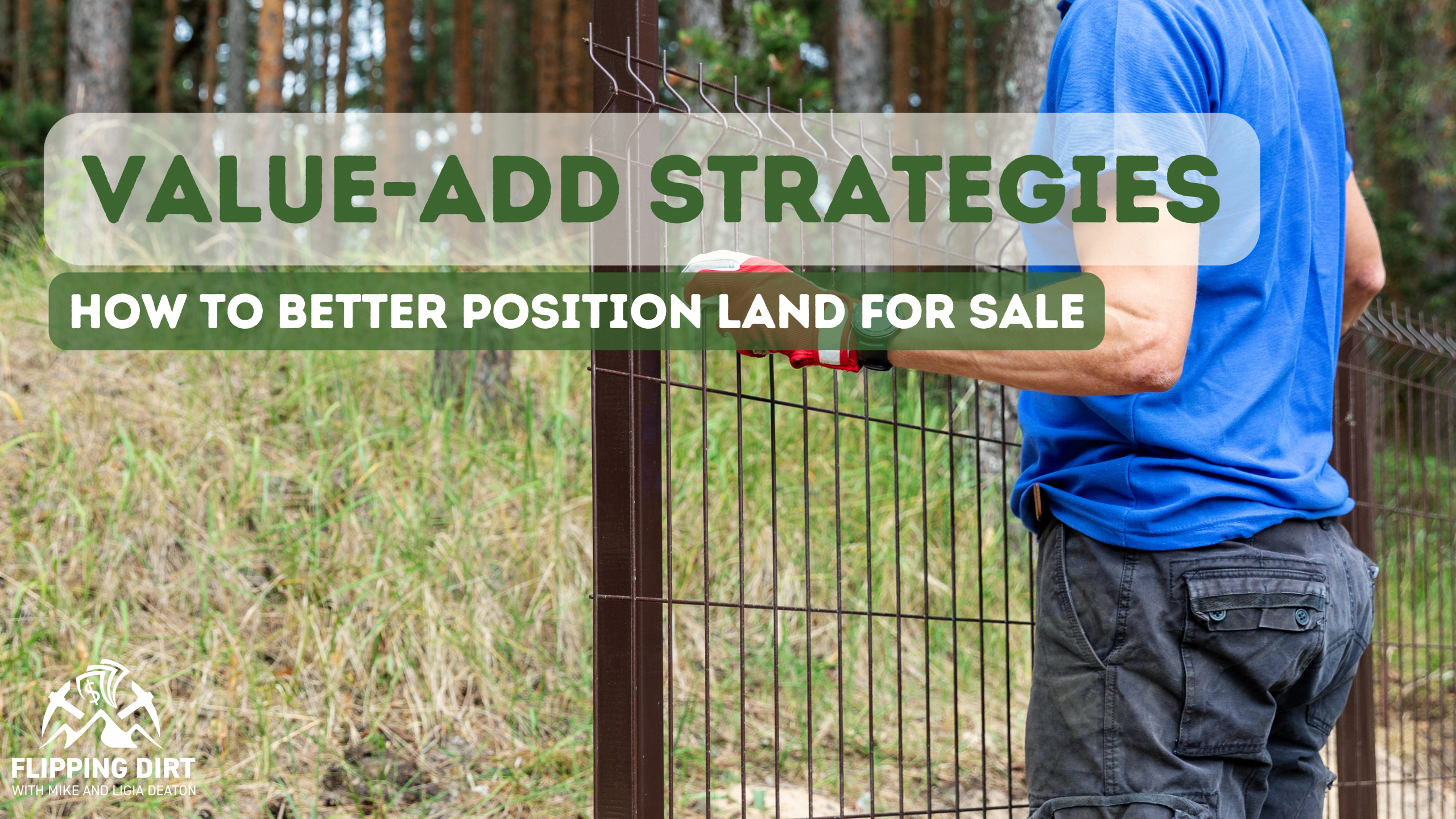
Overview: The 2026 land play is adding just enough usability to a raw parcel so it sells faster and for more, without becoming a builder. Instead of flipping random dirt, smart investors improve access, clear a building pad, confirm utilities or a septic path, or package the lot for a specific buyer like a manufactured-home owner. The parcel does not change size. The packaging changes, and packaging is what a buyer actually pays for.
What does “the packaging changed” actually mean?
It means you make the same piece of land easier to say yes to. Raw land is a question mark for most buyers: Can I access it? Can I build? Where would the house go? Every unanswered question is a reason to offer less or walk away.
Packaging removes those questions. You are not developing a subdivision. You are doing the small, cheap improvements that turn a vague parcel into an obvious purchase. Same dirt, clearer story, bigger number.
Key Takeaways
- The 2026 edge is usability, not acreage: make the parcel easy to picture and easy to buy.
- Small moves (access, a cleared pad, a utility or septic answer) can lift value and speed the sale.
- Packaging for a specific buyer, like a manufactured-home buyer, widens your market.
- With the median U.S. home near $415,000, demand for affordable buildable land is real (NAR).
- You add value with information and light work, not a builder’s budget.
Why is this working so well right now?
Because affordability is broken and buyers want a realistic path to owning. The median existing-home price sat around $415,000 in late 2025, per the National Association of Realtors. When finished homes feel out of reach, a buildable, clearly usable lot becomes the affordable on-ramp, especially for manufactured and modular homes.
A raw parcel with no answers competes on price alone. A packaged parcel competes on ease. In a pickier market, ease wins. This is the same lesson we keep relearning: the disciplined, unglamorous work outperforms the flashy stuff, which we wrote about in Boring Wins: What That Means for Your Land Business.
What “packaging” moves actually add value?
The best moves are cheap, fast, and answer a buyer’s biggest fears. You are buying certainty for them.
| Packaging move | Question it answers | Relative cost |
|---|---|---|
| Confirm and mark legal access | Can I legally get to it? | Low |
| Clear a rough building pad / driveway line | Where does the home go? | Low-medium |
| Get a utility or septic/perc answer | Can I actually live here? | Medium |
| Provide a simple site sketch and photos | What am I really buying? | Very low |
| Target a specific buyer (e.g., manufactured home) | Is this right for me? | Low |
Notice most of these are information, not construction. A perc test result, a marked access point, and clear photos can move a parcel from “maybe” to “sold” without heavy spending.
Do you have to become a developer to do this?
No, and that is the point. Becoming a builder adds cost, time, and risk, which is exactly what the land model is designed to avoid. The 2026 play is the light-touch version: do the small work that unlocks value, then sell to someone who wants to finish it.
You still buy at a discount, you still resell near retail, and you can still offer owner financing. Packaging just widens the spread and shortens the wait. Pair it with good market selection, covered in How We Pick Profitable Land Markets, and you have a repeatable edge.
How do you start using this on your next deal?
Start before you buy. During due diligence, note what is missing: access clarity, a building spot, a utility answer. If a couple of cheap moves would remove the biggest objection, that parcel is a packaging candidate.
Then buy with that plan in mind, do only the work that answers the buyer’s top question, and market the certainty you created. Learn the fast vetting process in How to Analyze a Land Deal in 10 Minutes or Less.
Frequently Asked Questions
Isn’t this just land development?
No. Development means building and heavy infrastructure. Packaging means light, cheap moves like confirming access or clearing a pad, so a buyer can finish the vision themselves.
What is a land-home package?
It is a parcel prepared and marketed for a home, often a manufactured or modular home, so the buyer sees a clear path to living there. You sell the ready-to-use lot, not the finished house.
How much should I spend on packaging?
Only enough to remove the buyer’s biggest objection. Many valuable moves, like a site sketch, marked access, or a perc test, are low cost relative to the value they unlock.
Does packaging work with owner financing?
Yes. A more usable parcel is easier to sell on terms, which can mean a stronger down payment and steady monthly income on top of the higher price.
Will this work in any market?
It works best where there is real buyer demand for affordable, buildable land. Good market selection still matters, so package parcels people actually want.
The bottom line
The parcel does not have to change for the payday to grow. Answer the buyer’s biggest questions with a few cheap, deliberate moves and you turn raw dirt into an obvious purchase. Same land. Better packaging. Bigger, faster exit.
Want the full acquisition and resale playbook? Start with our free resources at Flipping Dirt.
Mike and Ligia Deaton have closed 700+ land deals at 150%+ average annual ROI since leaving corporate life in 2016.
Flip the script. Live life: elevated.