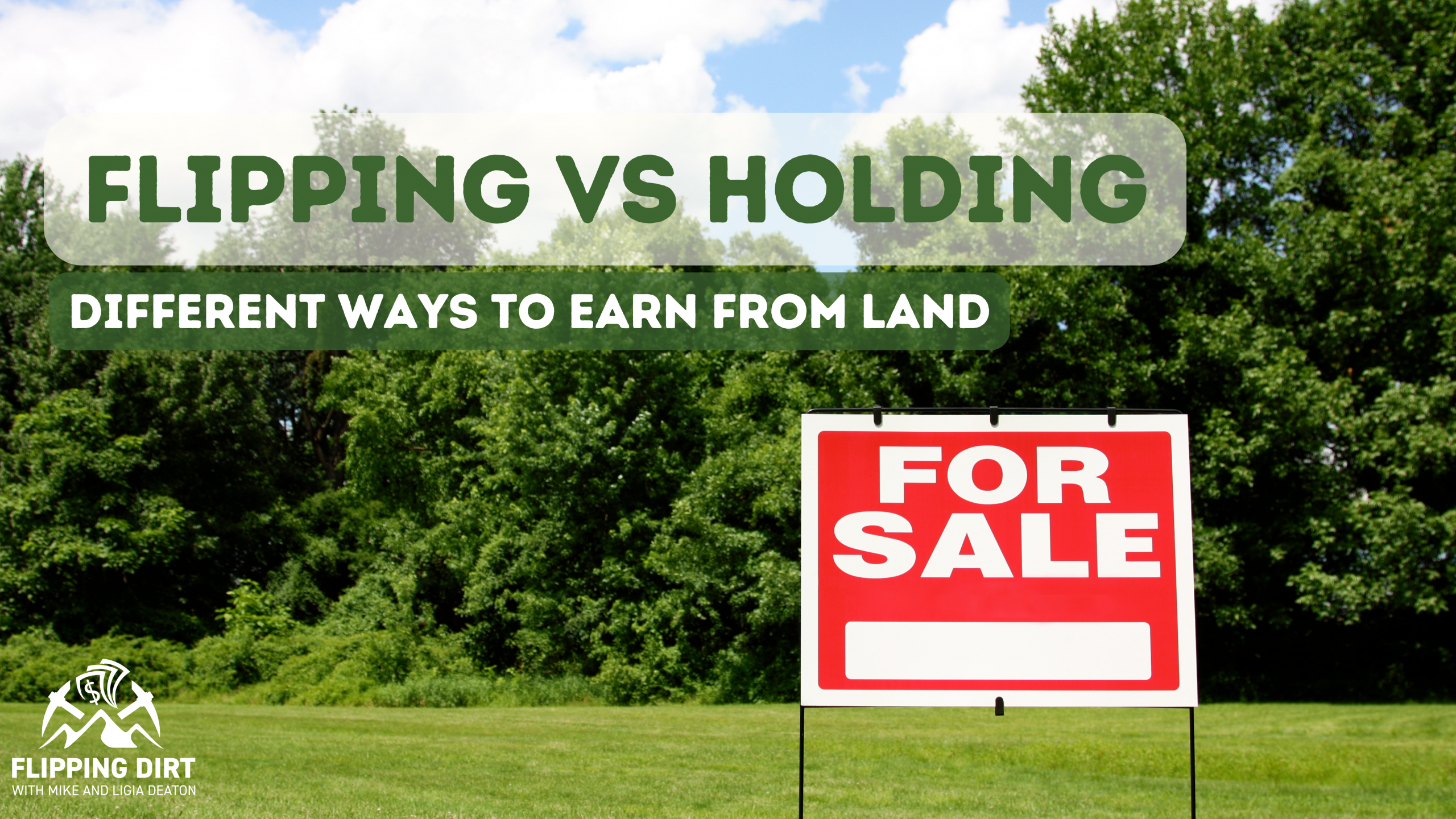
Quick Answer: Flipping land means buying a parcel below market value and reselling it fast for a one-time cash profit. Holding land means keeping it, usually selling on owner financing so a buyer pays you monthly for years, or land banking while values rise. Flipping builds capital quickly; holding builds recurring income and long-term appreciation. The right choice depends on whether you need cash now or cash flow later. Most serious operators do both, using flips to fund the holds.
What is the difference between flipping and holding land?
The difference is timing and payout. A flip is a quick in-and-out: buy low, sell at a fair retail price, collect a lump sum, move on. A hold keeps the asset working for you, either by selling it on terms so the buyer pays monthly, or by land banking and waiting for appreciation.
Two definitions to anchor this. Land flipping is buying a discounted parcel and reselling it quickly for cash. Owner financing is selling a parcel and acting as the bank, so the buyer pays you a down payment plus monthly installments with interest. One is a payday. The other is a paycheck.
Key Takeaways
- Flipping = fast, one-time cash profit. Holding = recurring income or long-term appreciation.
- Owner financing turns a single sale into monthly cash flow, often with interest.
- Land banking bets on appreciation; U.S. farm real estate values have climbed to record levels (USDA).
- Flips fund your business and life now. Holds build wealth and passive income over time.
- The smartest play is usually a blend: flip to raise cash, hold to build cash flow.
When should you flip land?
Flip when you need capital now. Flipping produces the fastest, cleanest profit in the land business. You buy at 30 to 60 cents on the dollar, resell near retail, and pocket the spread in weeks or months instead of years.
Flipping is ideal when you are building your bankroll, replacing income, or funding future holds. The tradeoff is that once you sell, the income stops. You are only as good as your next deal. That is why we teach speed and consistency, covered in What 500+ Land Deals Taught Me About Speed.
When should you hold land?
Hold when you want income or appreciation instead of a one-time check. The most popular way to hold is selling on owner financing: you collect a down payment, then monthly payments with interest for years. It converts one parcel into a stream of cash flow and often produces more total profit than a straight flip.
The other reason to hold is land banking, buying and sitting on parcels in the path of growth. Land has been a durable store of value: U.S. farm real estate values have risen to record levels in recent years, according to the American Farm Bureau Federation’s analysis of USDA data. Holding trades speed for compounding.
Flipping vs. holding: side by side
| Factor | Flipping | Holding (owner finance / land bank) |
|---|---|---|
| Payout | One-time lump sum | Monthly income or future appreciation |
| Speed to cash | Weeks to months | Years |
| Best for | Building capital, replacing income | Building passive income and wealth |
| Income after sale | Ends at closing | Continues for the loan term |
| Total profit potential | Solid, immediate | Often higher over time (with interest) |
Can you do both at the same time?
Yes, and most experienced operators do. The common playbook is to flip the parcels you need to sell for cash and hold the ones worth financing. The flips fund your life and your buying; the holds build a growing base of monthly income.
Think of it as a barbell. Flips on one end for speed and liquidity. Holds on the other for cash flow and appreciation. Over time, the passive income from your holds can cover your lifestyle, which is the whole point of the business. That freedom math is the reason we started. If you want the beginner path first, read How to Get Your First Land Deal in 3 Simple Steps.
Frequently Asked Questions
Is flipping or holding land more profitable?
It depends on your goal. Flipping delivers profit faster, while holding on owner financing often produces more total profit over time because you collect interest. Cash now versus cash flow later is the real tradeoff.
What is owner financing in land?
It means you sell the parcel and act as the bank. The buyer pays a down payment and monthly installments with interest, so a single sale becomes years of income for you.
Do I need a lot of money to hold land?
Not necessarily. Many operators fund holds with the profits from flips, so you can start by flipping and roll gains into parcels you keep and finance.
What is land banking?
Land banking is buying parcels and holding them, often in the path of growth, to sell later at a higher price. It is a bet on appreciation rather than immediate cash flow.
Which should a beginner start with?
Most beginners start by flipping to build capital and confidence, then begin holding select parcels on owner financing once cash flow becomes the priority.
The bottom line
Flipping and holding are not rivals. They are two gears in the same machine. Flip when you need cash and momentum. Hold when you want income and appreciation. Master the flip first, then use it to fund a growing base of owner-financed parcels that pay you every month.
Want help deciding which parcels to flip and which to keep? Start with How to Analyze a Land Deal in 10 Minutes or Less or explore our free resources at Flipping Dirt.
Mike and Ligia Deaton have closed 700+ land deals at 150%+ average annual ROI since both were laid off in 2016.
We’ll catch you on the Flip Side!