Quick answer: A perc test (short for percolation test) measures how fast water drains through the soil on a piece of land. On any lot without public sewer, that drainage rate decides whether the ground can support a septic system, and a septic system is what makes the lot buildable for a home. If the land won’t perc, a buyer usually can’t put a house on it with a standard septic system. That one test can move a parcel’s value by tens of thousands of dollars.
Key Takeaways
- A perc test measures soil drainage to see if land can support a septic system.
- It only matters where there is no public sewer, which is most rural land.
- The sweet spot is roughly 10 to 60 minutes per inch. Too fast or too slow can fail.
- Sandy loam percs well. Heavy clay, shallow bedrock, and high water tables are the usual killers.
- You can pre-screen soil for free with the USDA Web Soil Survey before you ever pay for a test.
- Land that won’t perc is not worthless. It is a different, usually cheaper, tier of dirt.
What is a perc test?
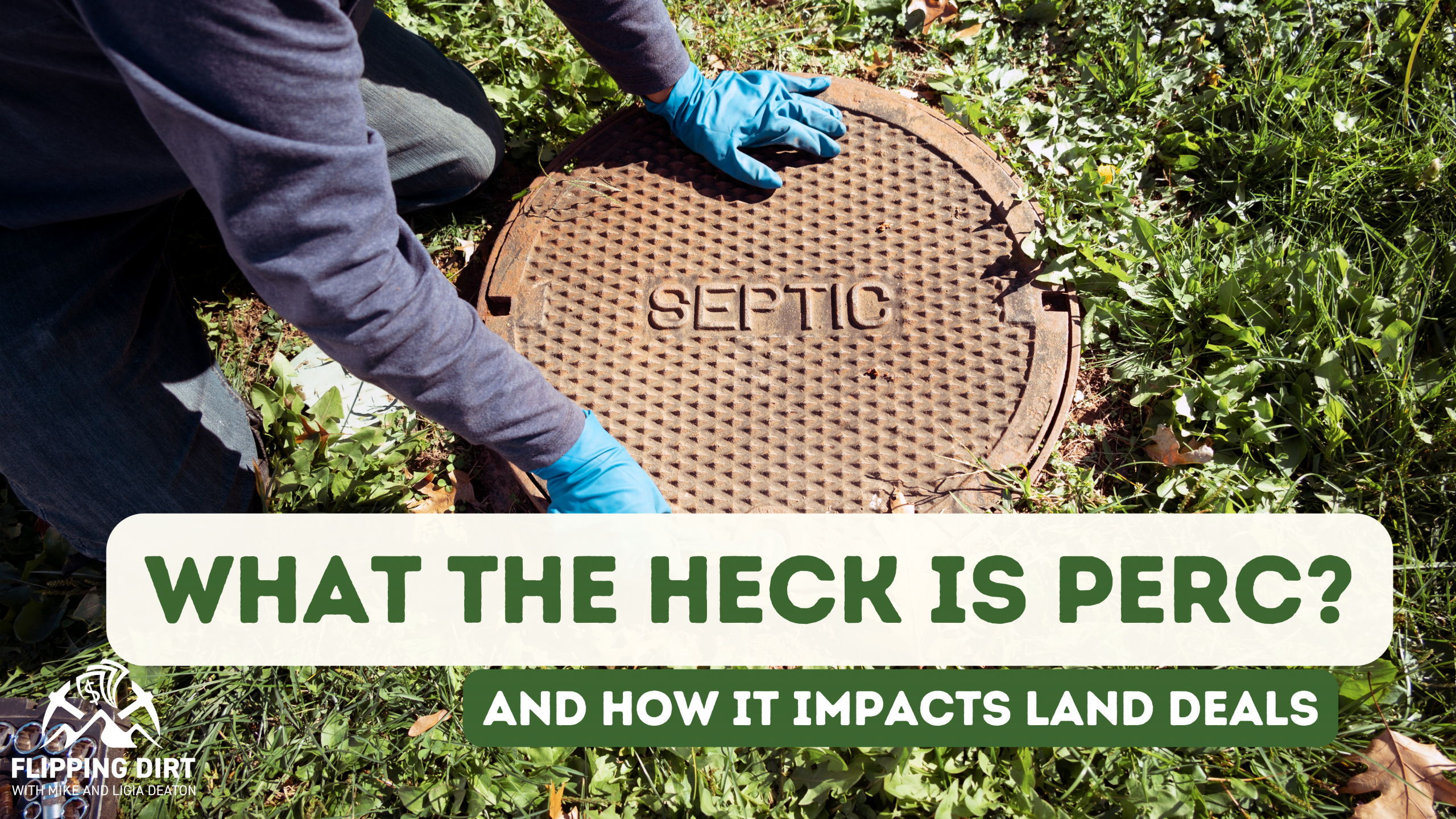
A perc test is a simple field test that measures how quickly water soaks into the ground. A tester digs one or more holes down to the depth of a future septic drain field, presoaks them, fills them with water, and times how fast the water level drops. That drop rate is called the perc rate, and it is usually written in minutes per inch (MPI).
The whole point is to answer one question: can this soil absorb and filter household wastewater? A septic system does not just hold waste. It releases treated water into a drain field, and the soil does the final filtering. If the soil drains at the right speed, the system works. If it does not, the system backs up or the wastewater never gets filtered.
More than one in five households in the United States rely on a septic system to treat their wastewater, according to the US EPA. On rural vacant land, septic is the norm, not the exception. So for land buyers, “will it perc” is often the single most important question on the parcel.
Why does “will it perc” matter so much for vacant land?
Because perc results decide buildability, and buildability decides value. A lot that perc-tests clean can support a home, which puts it in the highest-demand, highest-price tier of land. A lot that fails may be limited to recreation, hunting, camping, or off-grid use, which is a real market but a cheaper one.
This is why so many rural land buyers ask “will it perc?” before they ask almost anything else. “Perc approved” or “perc tested” land sells faster and for more money, because the buyer removes their biggest fear: paying for a homesite that can’t hold a home.
If you flip land, this cuts both ways. Knowing the perc status of a parcel is core due diligence (the research you do to confirm what you are actually buying and selling). It protects you on acquisition and it becomes a selling point on the exit. It sits right next to the other homework we teach, like knowing your real startup costs before you buy.
What is a good perc rate?
Most jurisdictions want to see a perc rate somewhere between about 10 and 60 minutes per inch. Inside that band, a conventional septic system usually works. Outside it, on either end, you can run into trouble. Exact thresholds are set by the local health department and vary by county, so treat these as general ranges, not a national rule.
| Perc rate (minutes per inch) | What it usually means |
|---|---|
| Under ~5 MPI (very fast) | Sandy or gravelly soil. Water blows through without filtering, which risks contaminating groundwater. Often rejected. |
| ~10 to 60 MPI (the sweet spot) | Well-drained soil that absorbs and filters at a healthy rate. Conventional septic typically approved. |
| Over ~60 MPI (very slow) | Heavy clay. Water pools instead of soaking in. Classic failure or requires an engineered system. |
Where does land perc well, and where does it fail?
Soil type drives almost everything. Well-drained sandy loam is the winner. The land that gives buyers headaches tends to share a few traits: too much clay, rock too close to the surface, or too much water in the ground.
| Condition | Perc outlook | Where you see it |
|---|---|---|
| Sandy loam / loamy soil | Strong. Drains at a healthy rate. | Much of the rural interior and well-drained uplands |
| Heavy clay | Poor. Drains too slowly. | Parts of Texas, the Southeast, and the Midwest |
| Shallow bedrock | Poor. Water has nowhere to go. | Mountain and rocky terrain |
| High water table / wetlands | Poor. Soil is already saturated. | Florida, coastal plains, low-lying and seasonal-flood areas |
| Very sandy / gravelly | Risky. Drains too fast to filter. | Some desert and beach areas |
One important wrinkle: perc results can be seasonal. Ground that drains fine in a dry August can fail in a wet April when the water table rises. That is why some counties require testing during the wet season, and why a passing test in the wrong month can be misleading.
How do you check if land will perc before you buy?
You do not have to guess, and you do not have to pay for a full test just to get a first read. Work it in this order:
- Pull the free soil data. The USDA Web Soil Survey lets you draw your parcel and read how the soil is rated for “septic tank absorption fields.” It is not an official test, but it is a fantastic screen to flag likely problem dirt before you spend a dollar.
- Check county records. The parcel may already have a perc test or a septic permit on file with the county health department. A prior approval is money and time you do not have to spend.
- Order the actual test. When it counts, a licensed soil scientist, engineer, or the health department runs the perc test (or a soil evaluation, see below) and files the result. This is the official answer.
Teaching clients this three-step screen is one of the fastest ways to make them sharper buyers. Most beginners either skip the soil check entirely or panic and pay for a test they did not need yet.
What if the land won’t perc?
A failed perc is not automatically a dead deal. You have two honest paths.
First, engineered or alternative septic systems can make marginal soil buildable. Mound systems, aerobic treatment units, and sand filters are all designed for ground that will not support a conventional drain field. The catch is cost. A conventional system runs roughly $3,000 to $8,000, while alternative systems commonly run $12,000 to $30,000 or more, based on contractor pricing guides. That gap can decide whether a build pencils out.
Second, reposition the use. Land that will not perc can still be great for recreation, hunting, camping, RV weekends, or off-grid setups. It is a real buyer pool. The mistake is pricing and marketing failed dirt like a homesite. Price it and sell it for what it is, and it moves.
How much does a perc test cost, and who does it?
A perc test usually costs a few hundred dollars up to around $1,000 or more, depending on the county, the number of test holes, and who runs it. The local health department almost always governs the process, and the work is done by the department, a licensed soil scientist, or an engineer.
Worth knowing: a growing number of states have moved past the classic water-drainage test toward a soil morphology evaluation, where a licensed soil scientist reads the soil profile (its texture, structure, and signs of a seasonal water table) instead of, or alongside, timing water in a hole. Same goal, different method. When someone in your market says “soil eval” instead of “perc test,” this is what they mean.
Frequently Asked Questions
Does a perc test matter if the lot is on city sewer?
No. A perc test only matters where there is no public sewer connection and a home would need its own septic system. If the lot ties into municipal sewer, perc is irrelevant. Always confirm sewer availability first.
How long is a perc test good for?
It depends on the county. Some accept results for a set number of years, others require a fresh test when a permit application is filed, especially if conditions or rules have changed. Check the local health department before relying on an old result.
Can land that failed a perc test ever be built on?
Often, yes, with an engineered or alternative septic system such as a mound or aerobic unit. These make marginal soil usable but cost significantly more than a conventional system, so the numbers have to work for the build.
Should I buy land that has not been perc tested?
You can, but price the risk in. Many buyers use a perc contingency or pre-screen the soil with the USDA Web Soil Survey and county records first. As a seller, you can sell as-is or pay for a test to add value and remove buyer hesitation.
What is the difference between a perc test and a soil evaluation?
A perc test times how fast water drains from a test hole. A soil evaluation (soil morphology) has a licensed soil scientist read the soil profile directly. Many states now use one, the other, or both to approve a septic system.
The bottom line
Perc is not complicated once you know what it is measuring. It is the soil answering one question: can this ground handle a home? Learn to pre-screen with free soil data, respect the water table, and price failed dirt for what it actually is. Do that, and “will it perc?” stops being a scary unknown and becomes just another box you check with confidence.
And if you have been holding back because you think every good market is already picked over, that is worth a second look. We take that fear apart in Is Land Investing Too Competitive Now?
Want the simple math on how a few clean parcels can build real income? Run the numbers with our free Land Calculator and see what your budget could grow into over the next 12 months.
We’ll catch you on the Flip Side! ⛏️
About the authors: Mike and Ligia Deaton were both laid off in 2016 and turned vacant land into their full-time business. Over 10+ years and 700+ deals, they have built Flipping Dirt to teach everyday people how to buy and sell land the right way. Real deals, real numbers, no hype.