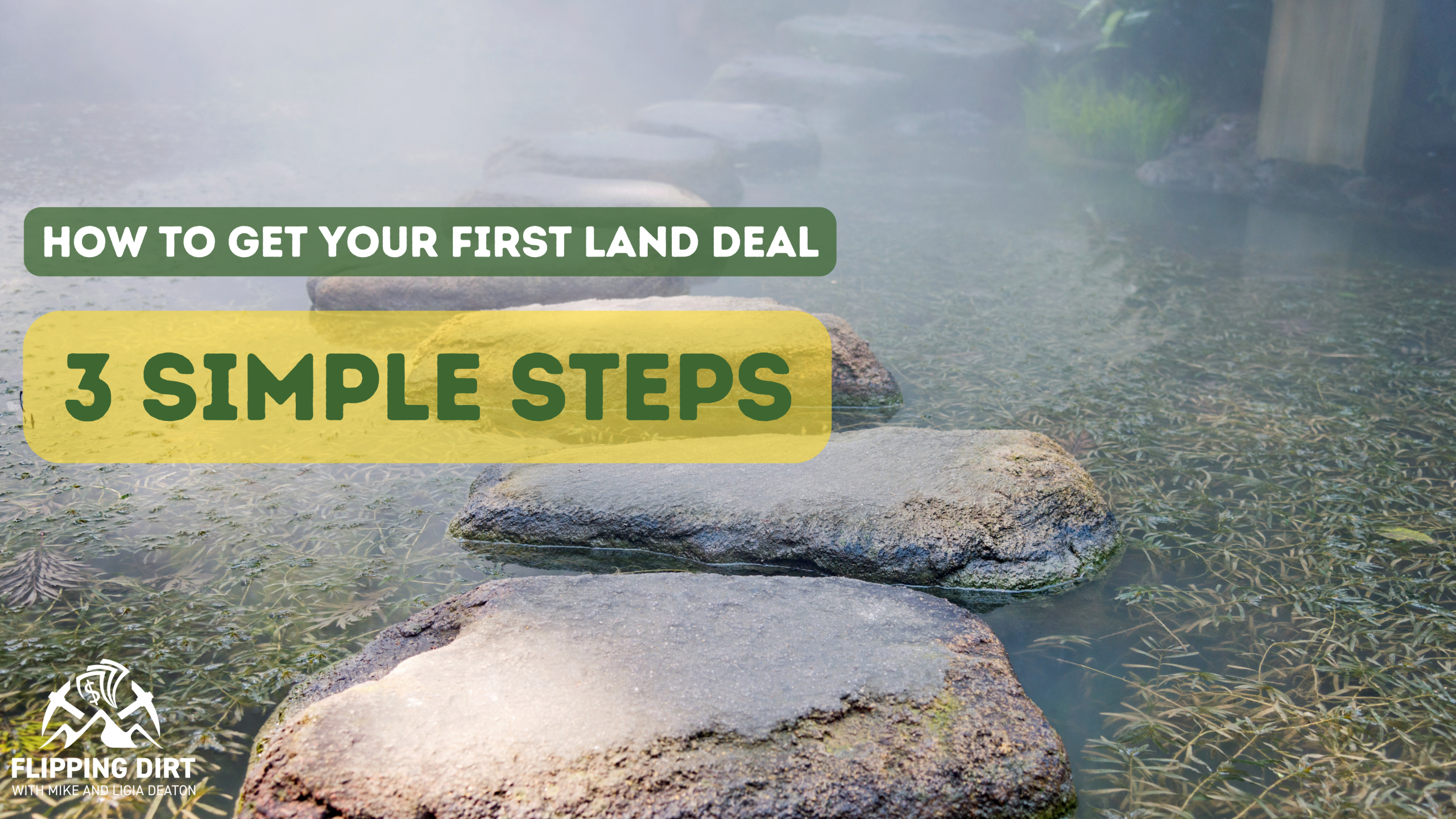
Quick Answer: You get your first land deal in three steps. Pick one affordable rural market, send offers to a list of landowners (by mail, text, cold call, or email), then run fast due diligence on the replies before you buy low and sell at a fair retail price. You do not need a license, a big bankroll, or experience. You need one good market and the discipline to make offers.
What is the fastest way to get your first land deal?
The fastest path is to stop studying and start making offers. Most beginners stall because they treat land like a research project instead of a numbers game. Land flipping means buying vacant parcels below market value and reselling them, often with simple owner financing for cash flow.
There is no shortage of inventory. The United States has roughly 2.3 billion acres of land, and about 1.4 billion of those acres are privately owned, according to the USDA Economic Research Service. That is a massive, fragmented market where motivated sellers exist in every county. Your job is to find a few of them.
Key Takeaways
- You can start with a few hundred to a couple thousand dollars, not $50,000.
- Pick ONE market and learn it cold before you expand.
- Offers win deals. Mail, text, cold call, or email a clean list of owners.
- Due diligence is fast when you know the five checks: access, zoning, wetlands, utilities, and back taxes.
- Buy low, sell at a fair price, and use owner financing to create recurring income.
Step 1: How do you pick a market for your first deal?
Pick one county where land is affordable, transactions are active, and you can understand value quickly. You are not looking for the “best” market in America. You are looking for a workable one you can master.
Look for steady sales of vacant rural and recreational parcels, prices low enough that a mistake will not wipe you out, and enough comparable sales that you can price with confidence. Stay in one market until you have closed a few deals. Jumping between counties is the most common beginner mistake we see.
Step 2: How do you reach landowners?
You reach landowners with direct offers. Build a list of owners of vacant parcels in your market, then send a simple offer to buy. Outreach can go out by mail, text, cold call, or email. Direct mail is still the workhorse because it reaches people who never answer a strange phone number.
Direct mail also still performs. Industry benchmarks compiled by CRST from ANA data put direct mail response rates well above email, often in the low single digits for prospect lists. A small response rate is plenty when each closed deal can profit thousands.
The cost to reach people is low. As of 2026, a First-Class postcard runs about $0.61, and bulk Marketing Mail postcards can drop near $0.31 each at automation rates, per the USPS 2026 price schedule. If you would rather start without spending on mail, you can begin with free outreach like calls and texts. We break that down in Flipping Dirt With No Money.
Step 3: How do you run due diligence before buying?
Run five fast checks before you ever sign: legal access, zoning and use, wetlands or flood risk, utility availability, and any back taxes or liens. These five questions separate a clean parcel from a money pit, and you can answer most of them online in under an hour.
| Step | What you do | Goal |
|---|---|---|
| 1. Pick a market | Choose one affordable, active county | Understand value fast |
| 2. Make offers | Mail, text, call, or email owners | Get motivated sellers to reply |
| 3. Due diligence | Check access, zoning, wetlands, utilities, taxes | Buy clean, avoid money pits |
Once a parcel passes the checks and the numbers work, you buy below market and list at a fair retail price. Want to see how the money math shakes out? Read How Much Money Do You Really Need to Start Flipping Land? for realistic first-deal budgets.
How much money do you really need for a first deal?
Less than most people think. Your real first-deal costs are outreach and basic due diligence, which can total a few hundred to a couple thousand dollars. The land itself is bought at a deep discount, and many investors use owner financing or partners to fund the purchase so very little cash leaves their pocket.
The bigger investment is reps. The first deal is the hardest because it is unfamiliar. The tenth is routine. That is the whole game: simple steps, repeated.
Frequently Asked Questions
Do I need a real estate license to flip land?
No. You are buying and selling property you own, which does not require a license. Always follow your state’s disclosure and contract rules, and use a title company or attorney to close.
How long does a first land deal take?
Most beginners take a few weeks to a few months to close a first deal, depending on how consistently they make offers. Consistent outreach is the single biggest driver of speed.
Is land flipping legal and safe?
Yes, when done honestly. You make fair offers, disclose what you know, and close through a title company. The five due diligence checks protect you from buying unusable land.
What if a landowner says no?
That is normal and expected. Land is a numbers game. A no simply means you move to the next owner on your list. Volume of offers, not perfect offers, gets the first deal done.
Can I do this with a full-time job?
Yes. Land is one of the most schedule-friendly ways into real estate because outreach and due diligence happen on your time. Many of our clients started while working W-2 jobs.
Your next step
Your first land deal is closer than you think. Pick a market this week, build a small list, and send your first offers. Action beats research every time.
If you want the full playbook, watch our free training on How Land Flipping Actually Works, or grab the FD Land Guide to get started today.
About the authors: Mike and Ligia Deaton were both laid off in 2016. They went all in on land and have since closed 700+ land deals at a 150%+ average annual ROI over 8+ years. They now coach everyday people to build freedom through land. We’ll catch you on the Flip Side!